|
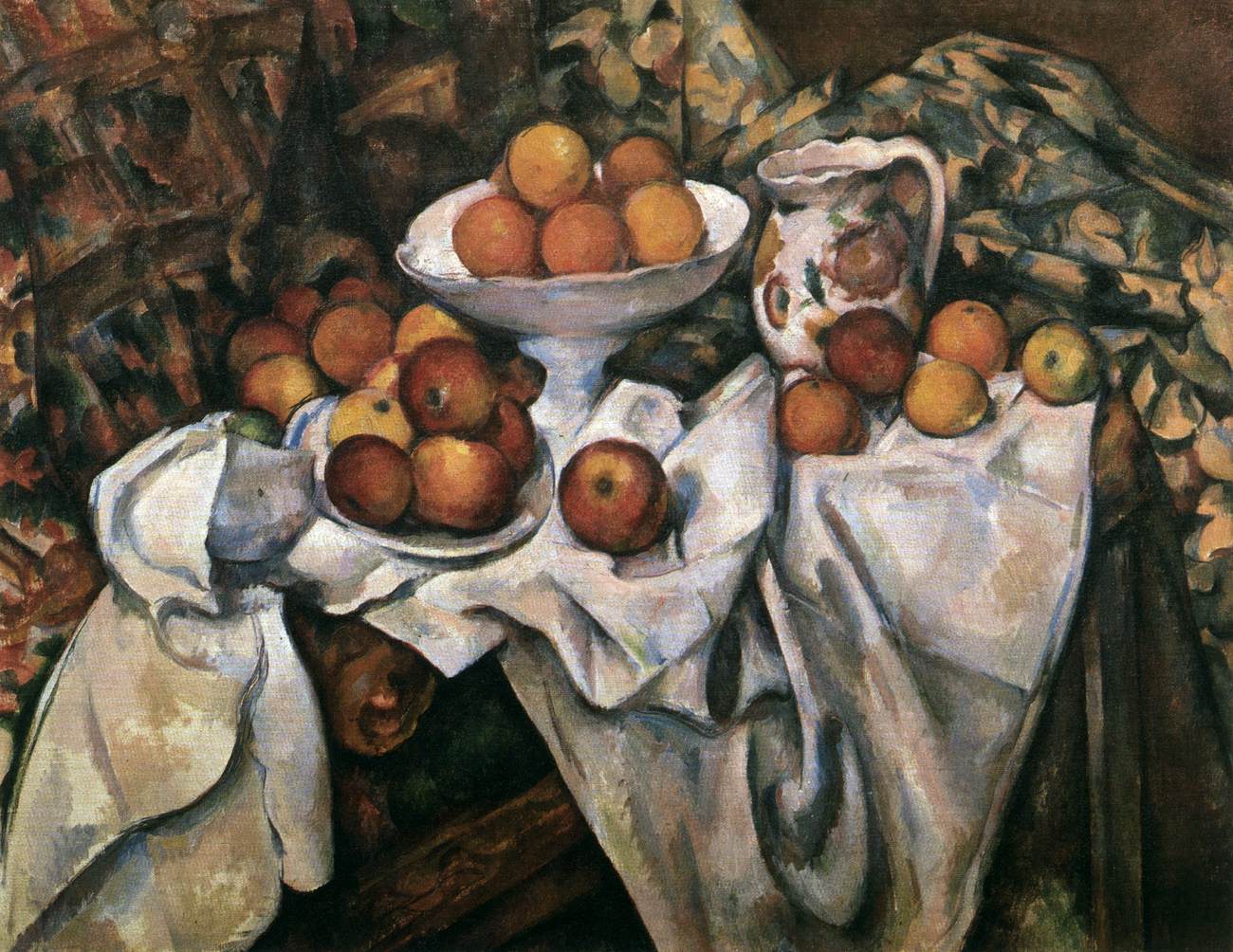
Still-lifes provided Cézanne an opportunity to paint things in accordance with his conception of form, and he could subject them to lengthier scrutiny than he could human sitters. In still-lifes he could explore ways of establishing visual harmony and three-dimensionality more thoroughly.
In the latter half of the 1890s Cézanne increasingly did more opulent, spatially more dynamic, indeed baroque compositions. These pictures are far removed from the straight representation of a laid table. No one would pile crockery, fruit, a brocade drape and a crumpled tablecloth on a chest in this way. This is painting for its own sake, with its own rules.
|