|
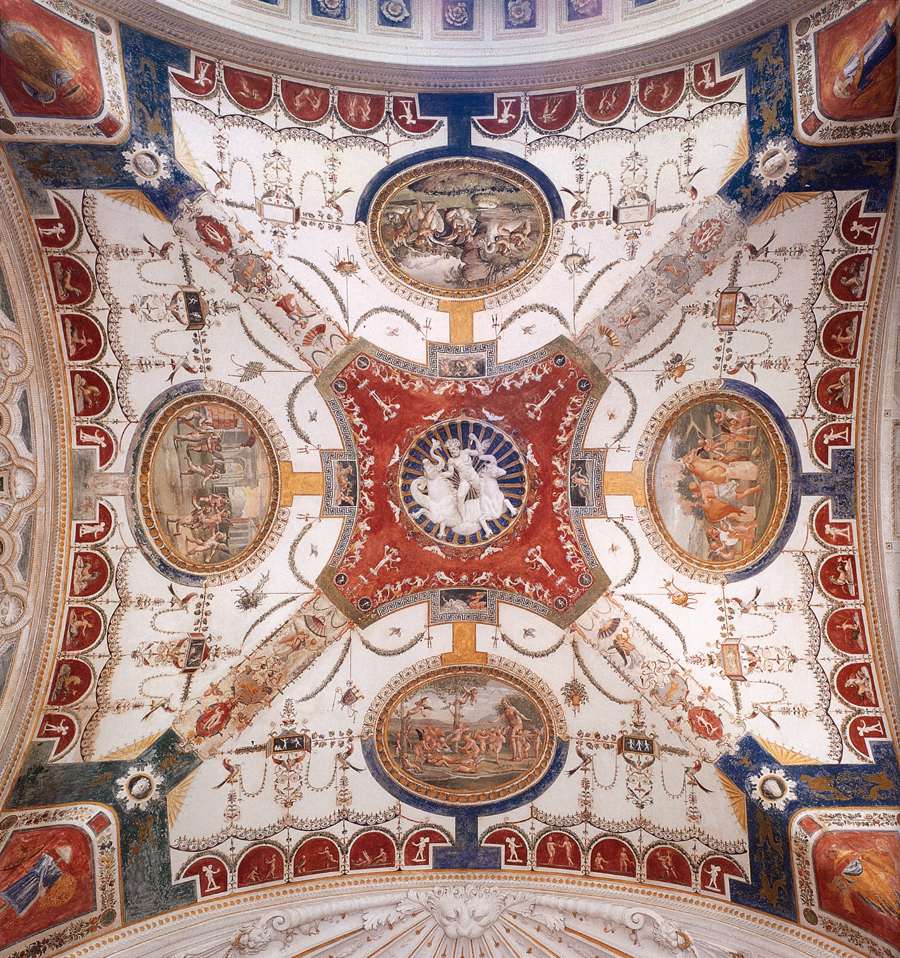
Some of the Roman paintings found in the Domus Aurea and elsewhere correspond quite precisely what Vasari and others determined to be the typical features of grotesques. These paintings inspired several ceiling designs 'all'antica' in the first part of the sixteenth century. The desire to revive not only the forms of ancient Roman architecture but also their decoration may help to explain the success of these paintings. In particular, Raphael and the specialists in his workshop, who mastered the genre completely, helped the grotesque style to spread quickly in Rome. In addition to the Vatican loggias, the decoration of the garden loggia of the Villa Madama is particularly important. Like its ancient predecessors, it has small pictorial scenes within the ornamental grotesques. In the effort to seem as authentically antique as possible, these images in turn reproduce antique paintings (not just ancient themes); they are, however, paintings that were known only from an ancient description, Philostratus's Imagines.
This detail from the southwest compartment of the loggia shows grotesques and four paintings after Philostratus.
|