|
After a period of study in Bologna in the "bottega" of Giuseppe Maria Crespi, Piazzetta settled in Venice permanently and developed his art and his career without leaving the city. At the beginning, his paintings were characterized by a harshly intense play of chiaroscuro and densely laid on paint, clearly the result of his contact with the robust brilliance of Crespi. Around half-way through the fourth decade of the eighteenth century, his paintings relaxes somewhat into a style which is characterized by the sensually sonorous timbre of colour which he achieved by means of a light which his contemporaries called "lume solivo".
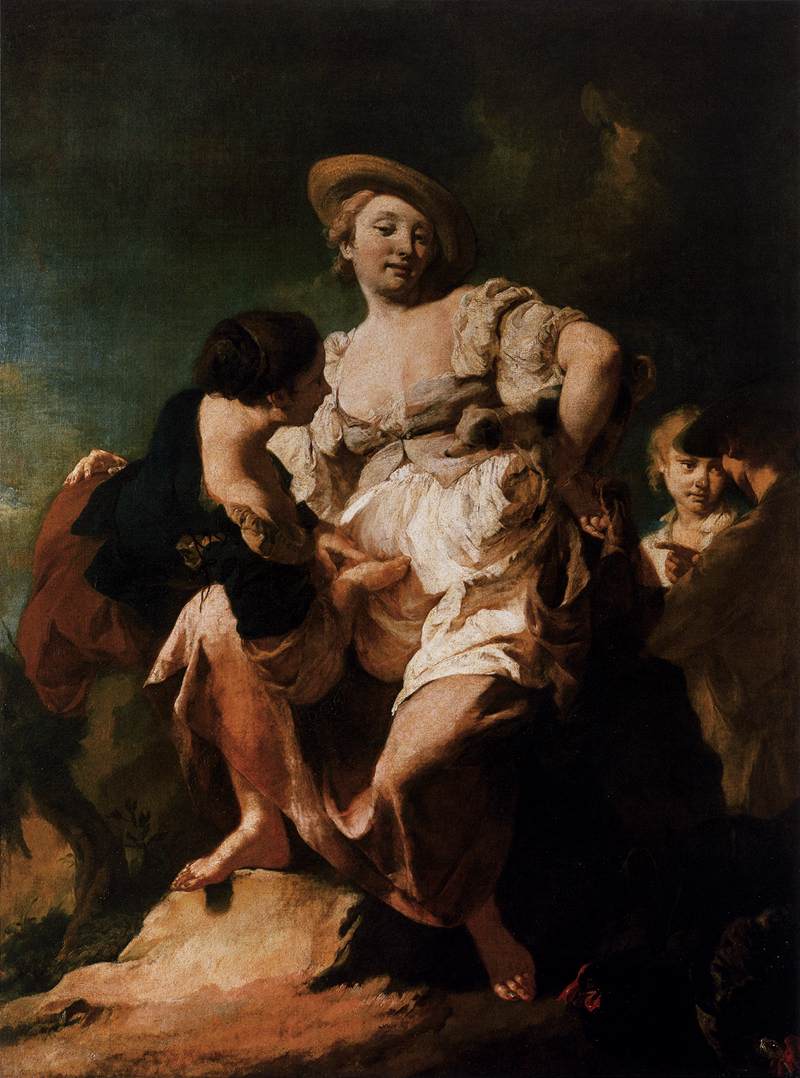
The artist's masterpiece in this phase of his activity was "The Soothsayer" the real subject of which is the meeting of two young peasant girls with one of them trying to attract the attention of the little dog which her companion is rather nonchalantly holding in her left arm. This moment of everyday life is transformed into pastoral idyll by the extremely careful fitting together of the planes of the scene and the grouping of the figures who are dominated by the glowing beauty of the young country-girl on whom the "lumo solivo" concentrates and who thus becomes the highest note of the rich symphony of chromatic shadings.
|