|
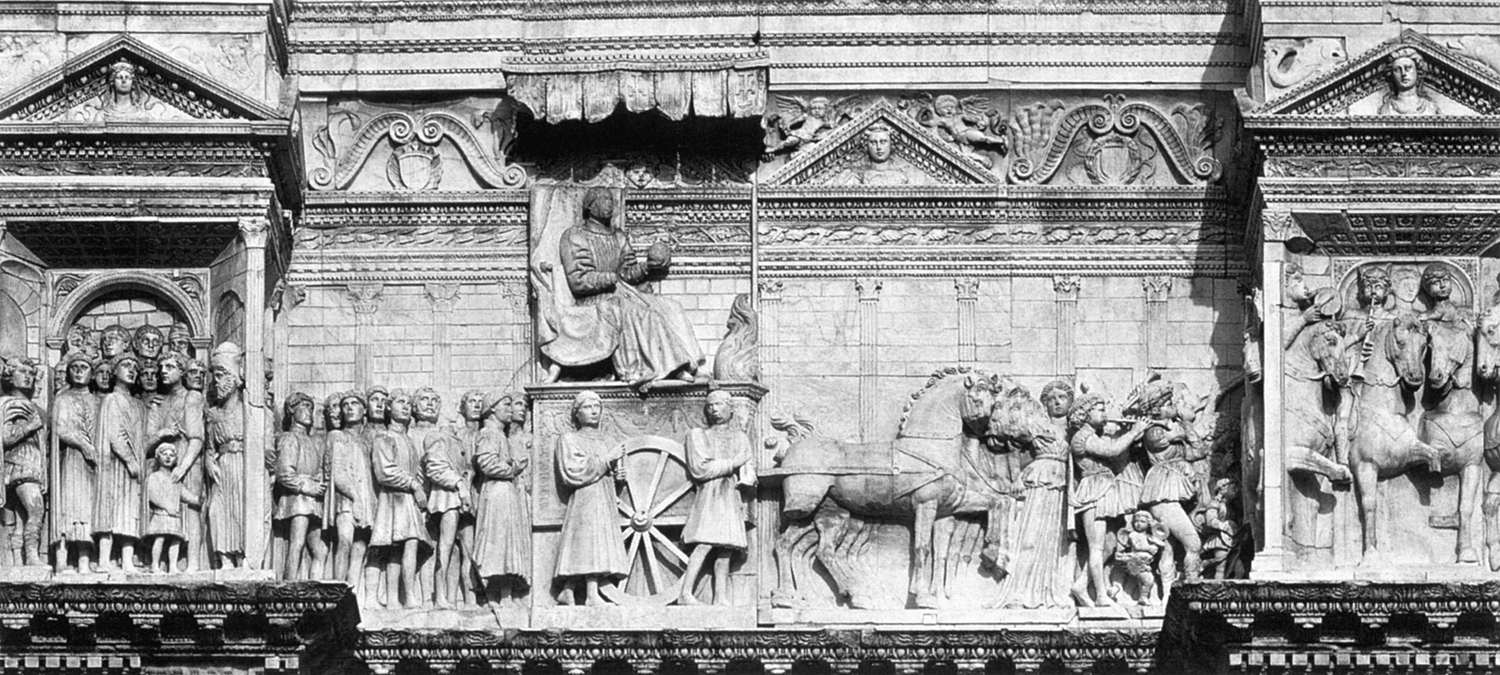
In Naples, a great part of the finest sculpture of the Quattrocento is Florentine export works by Donatello, Michelozzo, Antonio Rossellino and Benedetto da Maiano. The principal local sculptor is Francesco Laurana. His relief (shown on the picture) on the Triumphal Arch of Alfonso I, reveals him as charming, competent, and to a considerable extent heir to the tradition of Late Gothic realism.
In 1453 a triumphal arch built as the entrance to the Castel Nuovo in Naples. This was intended to commemorate the temporary arch that had been erected in front of the cathedral when King Alfonso entered the city in triumph in 1443. Typifying Alfonso's dependence on Spanish staff, the Catalan master Pere Joan (active 1400-58) oversaw the project. Under his direction Pietro da Milano, a Lombard sculptor who had spent his early years working in Ragusa in Dalmatia, supervised the work of at least five master sculptors (including Francesco Laurana) and thirty-three assistants. Sculptural work was allocated to different workers, ensuring a speedy completion of the project.
The attic story of this arch is decorated by a relief of The Triumphal Entry of Alfonso into Naples. In this relief, groups of figures, all carefully coordinated in size and scale, even though carved by different hands, enact an idealized and simplified version of Alfonso's triumphal entry into Naples a decade earlier. The sculptors evoke the character and decorum of early Roman imperial reliefs in the proud, calm bearing of nobles who process behind Alfonso, enthroned and elevated on a canopied processional cart, and in the more active figures of the musicians and horsemen who lead the way.
|