|
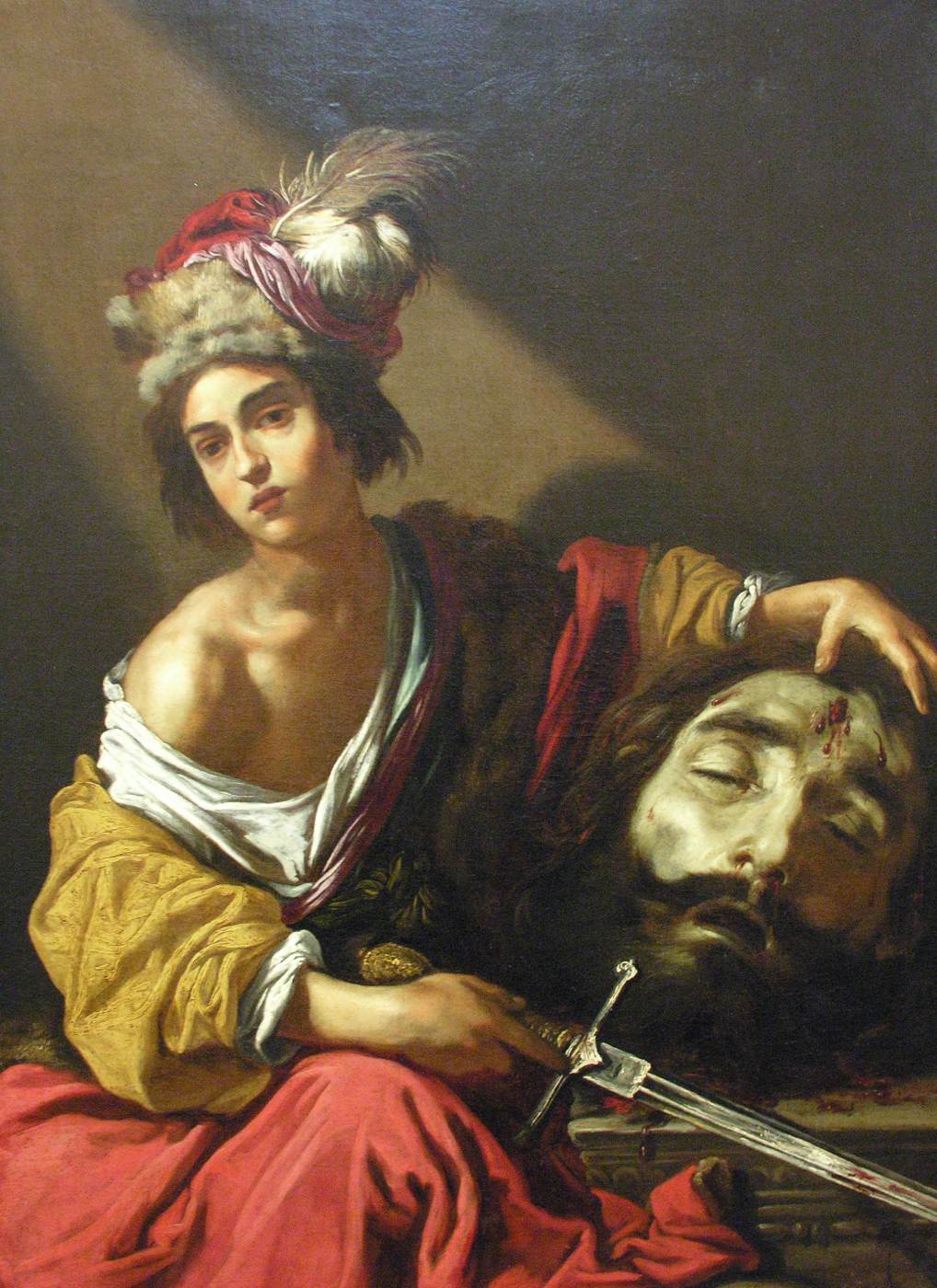
Painted during Claude Vignon's final years in Rome before his return to Paris, the work shows the French artist's masterful interpretation of Caravaggio's work. The strong shaft of light coming from the upper left increases the sense of drama in a seemingly calm scene by contrasting the beauty of the protagonist with the horror of the preceding event.
David's sumptuous headdress and clothes originally belonged to Jonathan, the son of King Saul, who took off his princely robes and gave them to the courageous young man as a token of affection. David is depicted as androgynous, which reflects an ideal of beauty for young men in the sixteenth and seventeenth centuries.
|