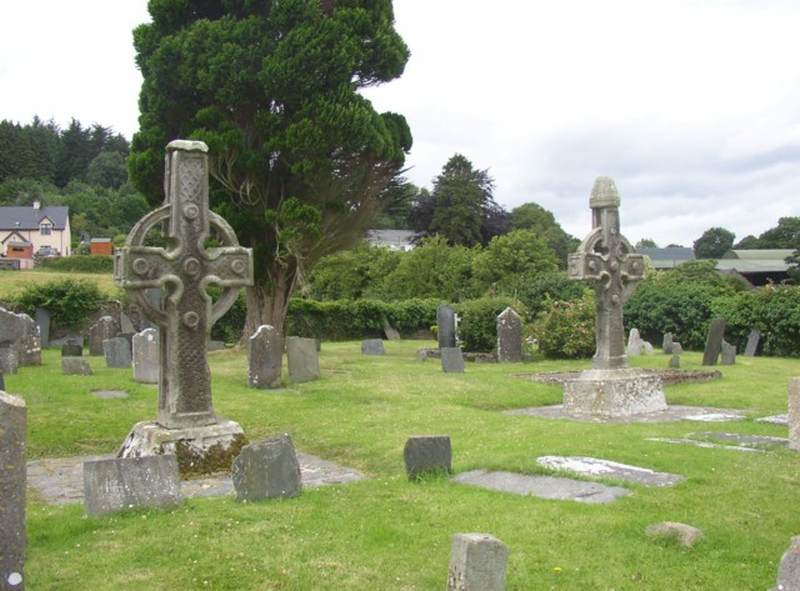
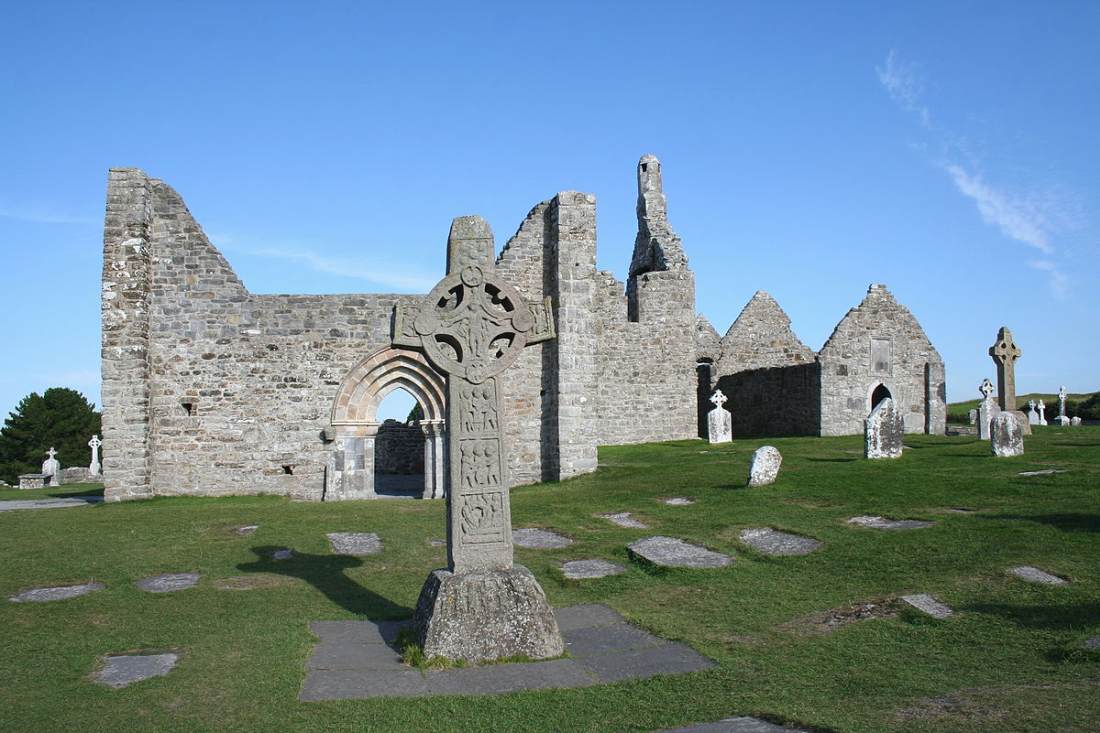
The quality of stone-carving fostered by the early Irish monasteries was among the finest in Pre-Romanesque Europe. By the 10th century, if not long before, such major monasteries as Clonmacnois, Kells, Monasterboice, and Armagh were equipped with well-modelled 'scripture crosses', placed at various points around their precincts. This development was remarkable given that Irish craftsmen, unlike those in other countries, had no experience of Roman sculpture on which to base their work. Patronage was concentrated on pillar stones and monumental crosses, but stone sculptors also manufactured hundreds of recumbent grave-slabs.
By the 8th or 9th century the free-standing cross had appeared, constructed of carefully shaped blocks, with designs cut vigorously in relief.
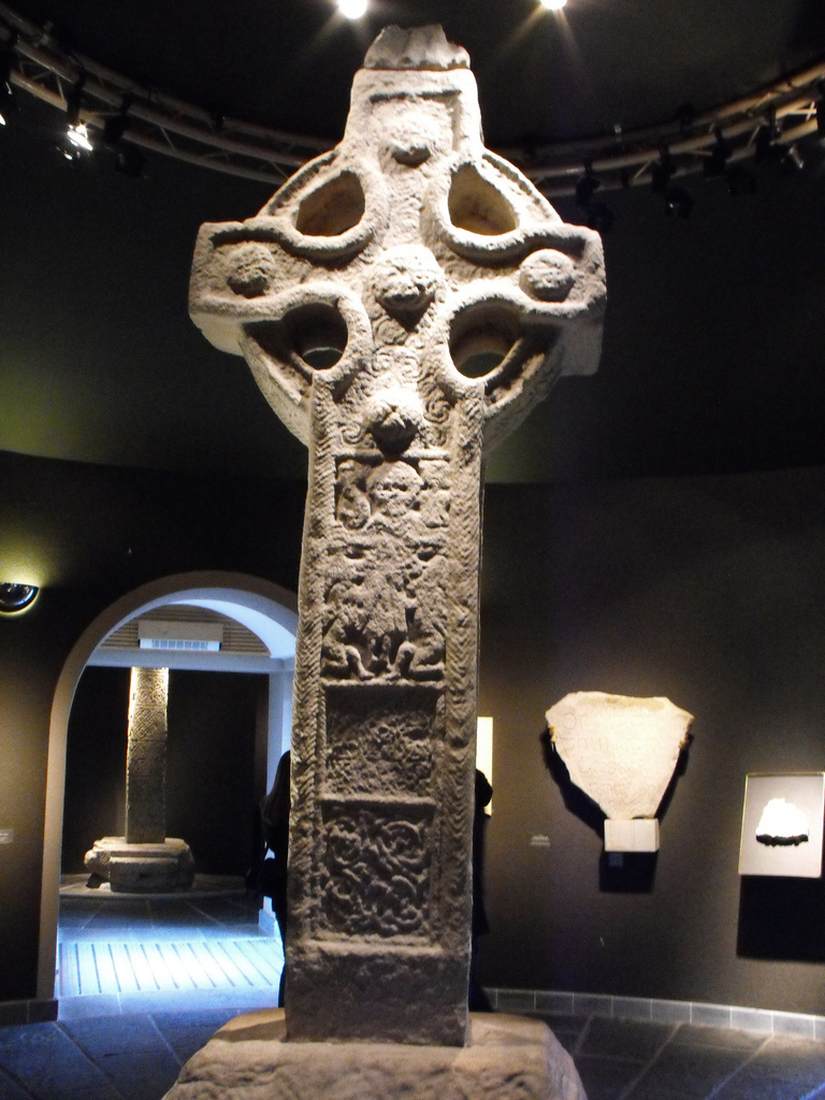
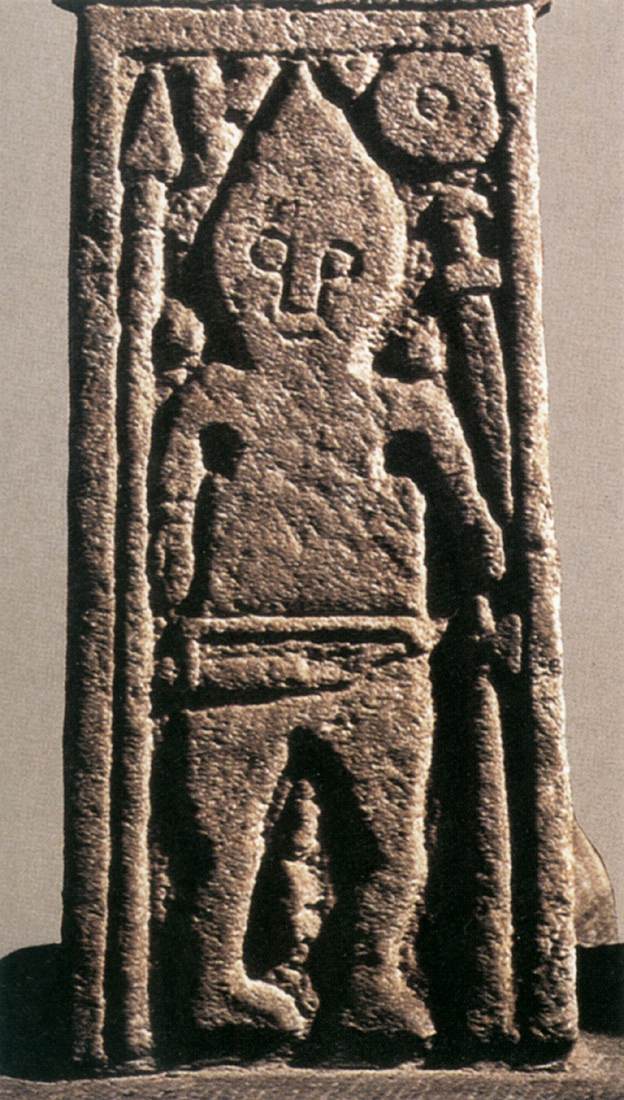
It is generally presumed that those crosses decorated principally with abstract designs, such as at Ahenny and a group at Clonmacnois (c. 800), preceded those with figure sculpture, but this is far from certain. Almost all crosses include some ornamental panels, and popular designs include spirals, whorls, bosses, interlace, a variety of animals, entangled humans, frets, and foliage scrolls. At Monasterboice and Ahenny these patterns were executed with breathtaking precision. Many designs were derived from manuscripts and metalwork, and the methods of the goldsmiths (e.g. rivets, bosses, and chip-carving) were reproduced unaltered in stone.
| Pre-Romanesque Art |
| Sculpture | Painting |