|
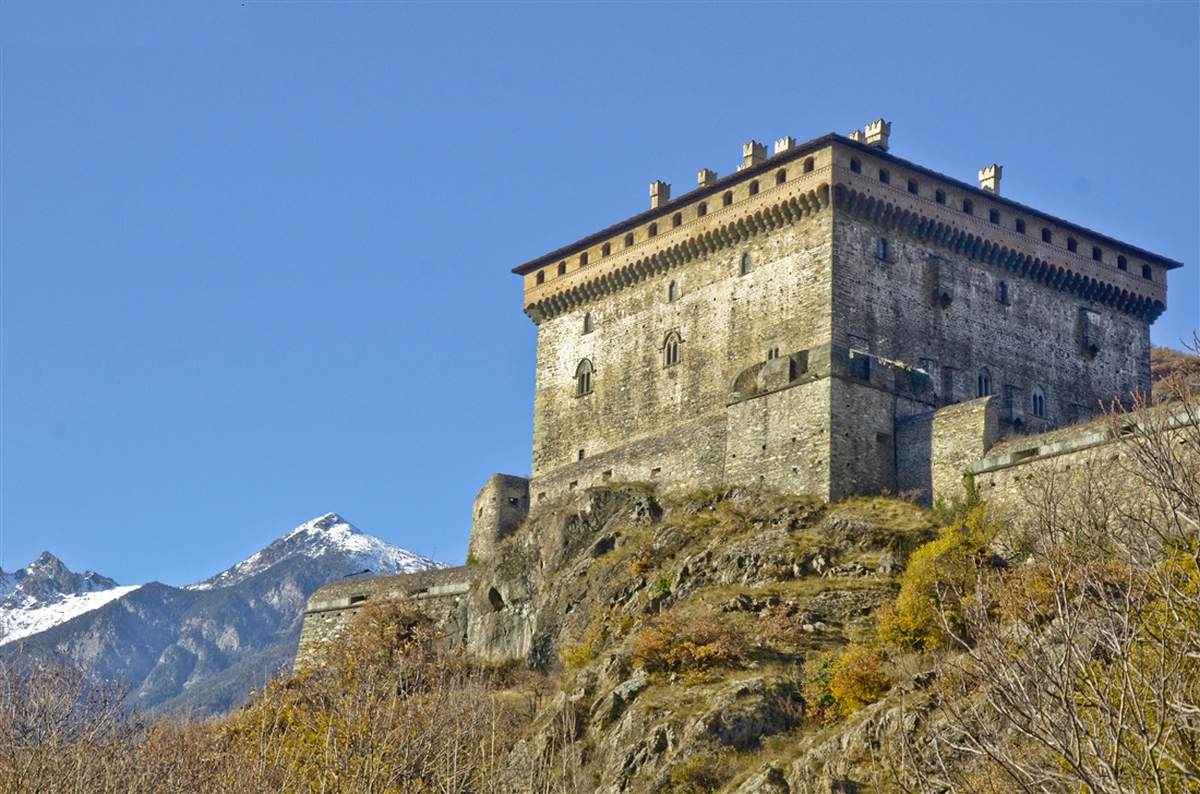
The mountainous region of Val d'Aosta in northwestern Italy is notable for at least one example of almost every type of Italian medieval castle. Of all of them, the one which holds least architectural promise in the uncompromising block of its exterior is the castle at Verrès. It was built for Ibleto di Challant (c. 1330-1409). Its form is so compact as to resemble a broad, square tower; no defensive subdivision into wall and turret is required. The soldiery were housed on the ground and second floors, and the first floor was devoted to the main living rooms and their lavatories and ancillary services. The thickness of the walls, the compact efficiency of the defensive arrangements, and the well-planned sequences of rooms all reflect the competence of the unknown architect.
The thing which places the castle of Verrès among the masterpieces of Italian fourteenth-century architecture is, however, the treatment of the sequences of stair and balcony that surround the tiny central courtyard and complete the system of internal circulation.
|