|
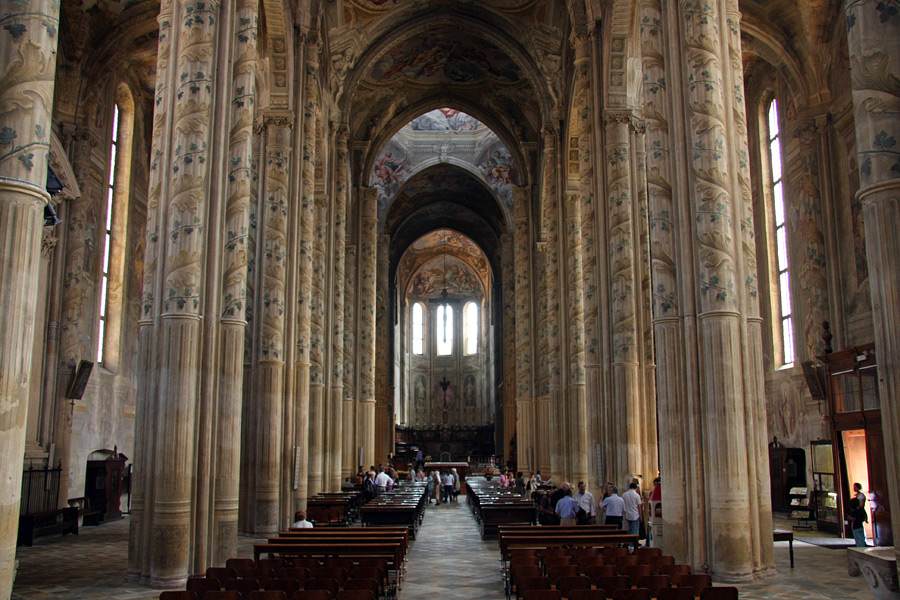
The existing main body of the Cathedral (Cattedrale di Santa Maria Assunta) in Asti, southwest of Milan, was probably up by about 1348 after a complete collapse in 1323. In the high-quality interior clustered brick columns with base-mouldings made vestigial by the raising of the floor appear to grow out of the ground and soar into the vaults, which were originally articulated by plain ribs. The height of the aisles is such that there are no clerestory windows, and the great, up-sweeping lancets are the only source of light. Five bays precede the octagonal crossing and three more lead on to the five-sided apse, which is repeated on a smaller scale at either end of the tall transepts. In plan, and in internal and external treatments the connections with the Lombard and Emilian Romanesque are obvious.
The photo shows the view of the nave towards the altar.
|