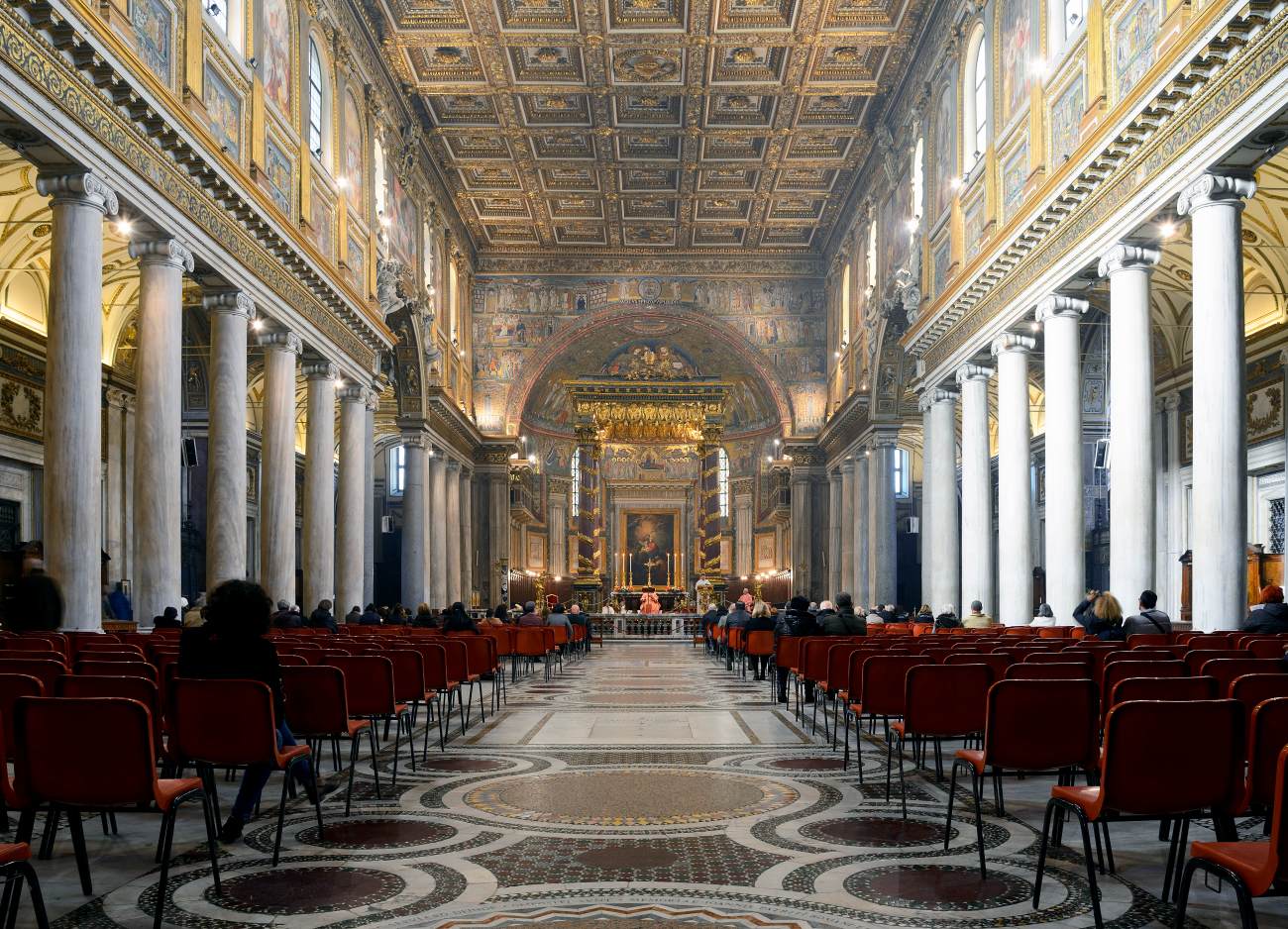
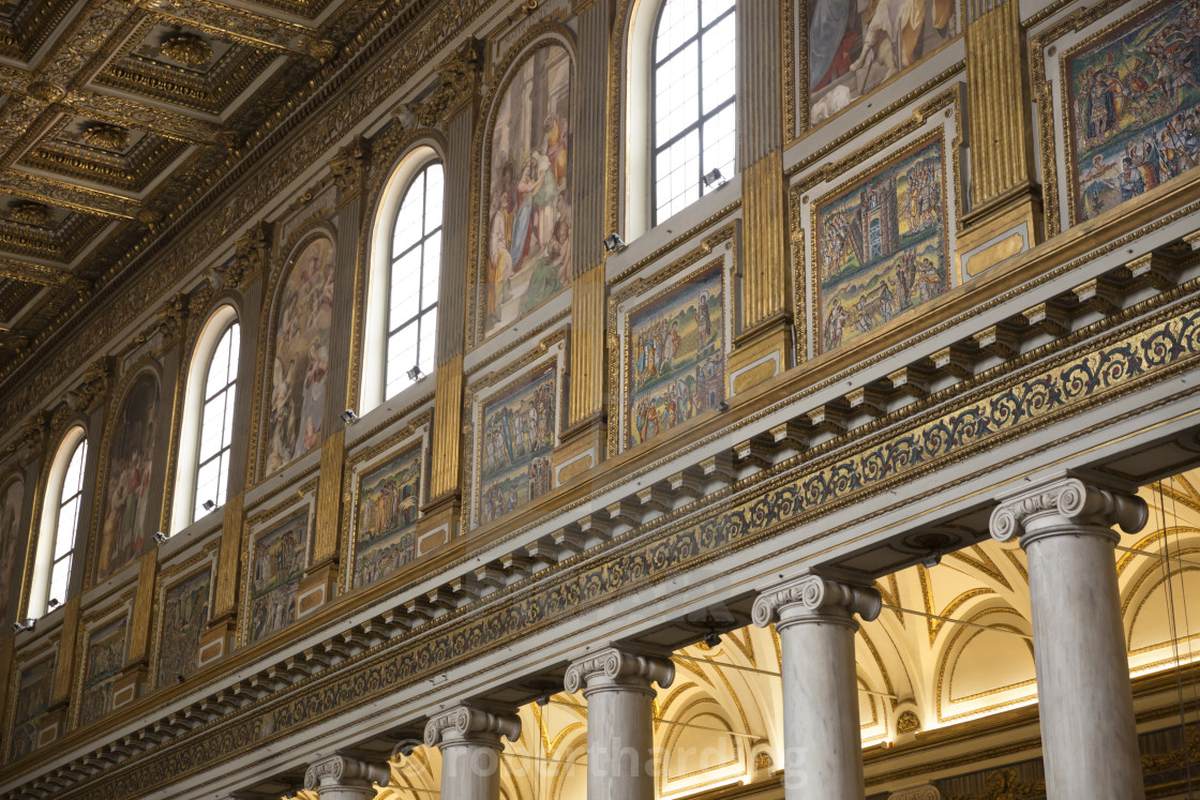
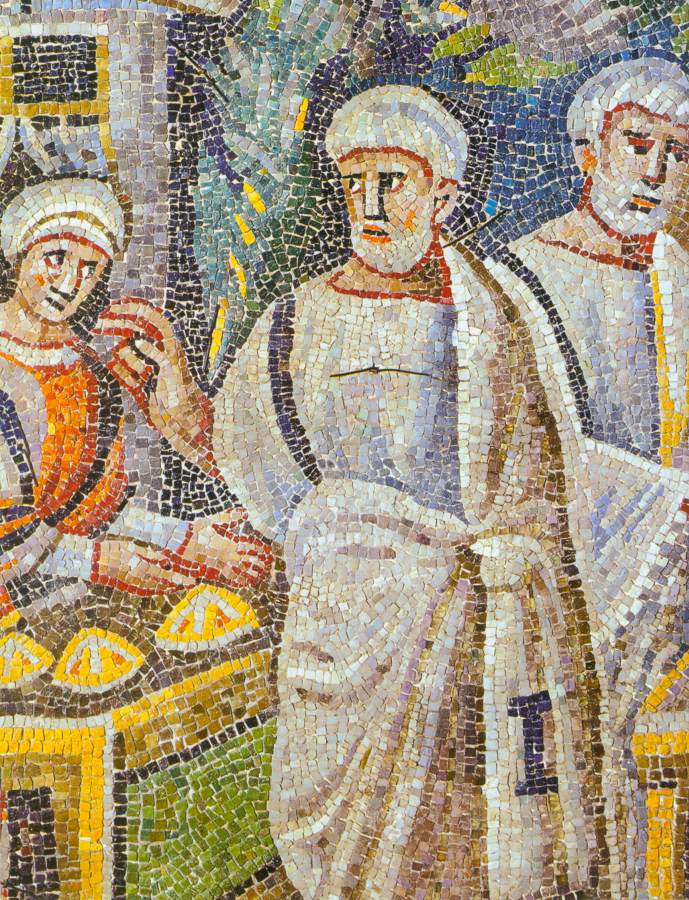
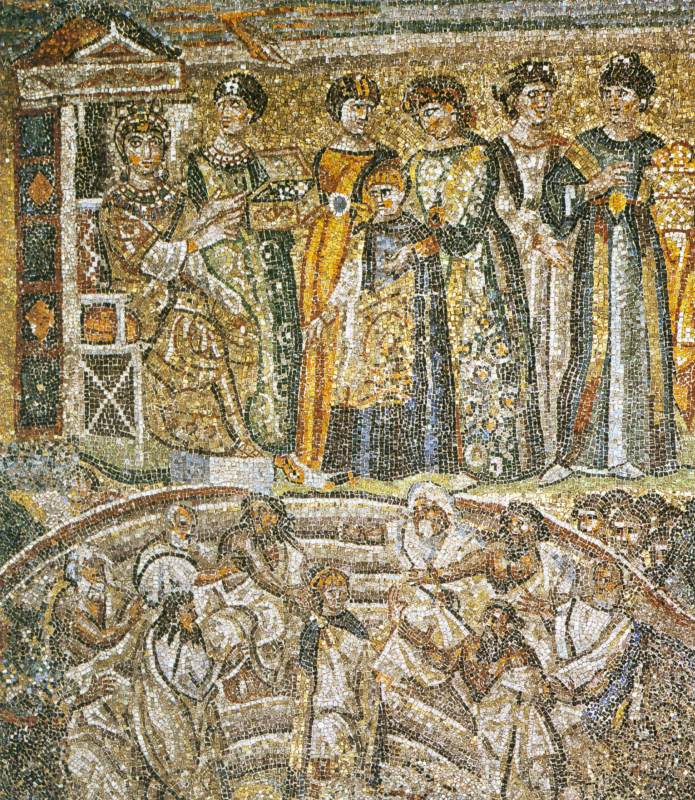
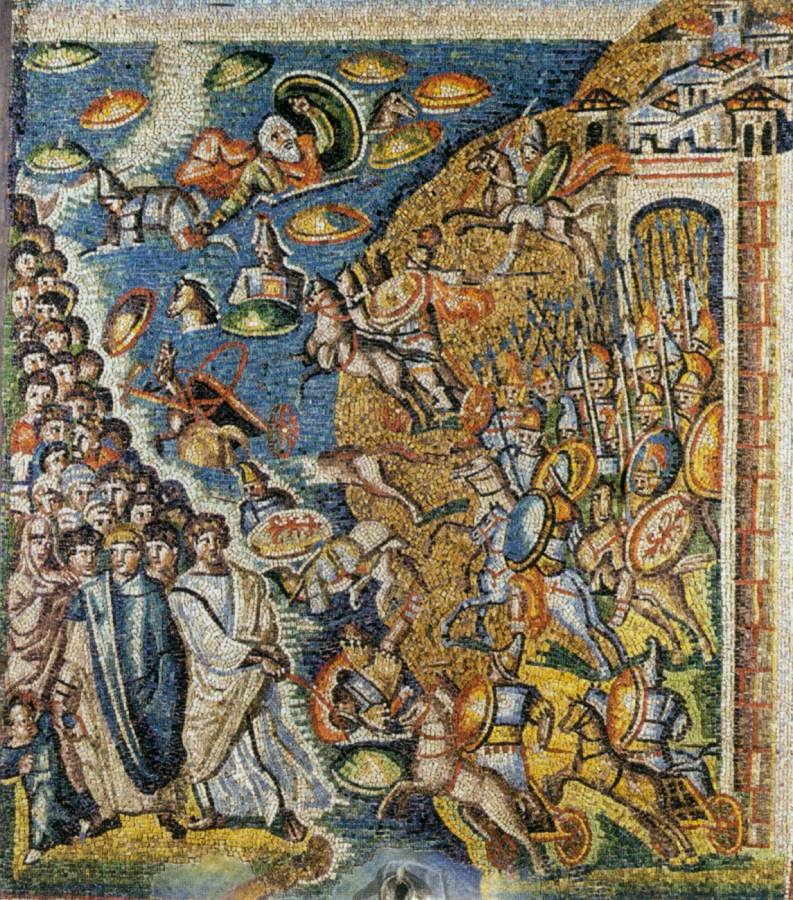
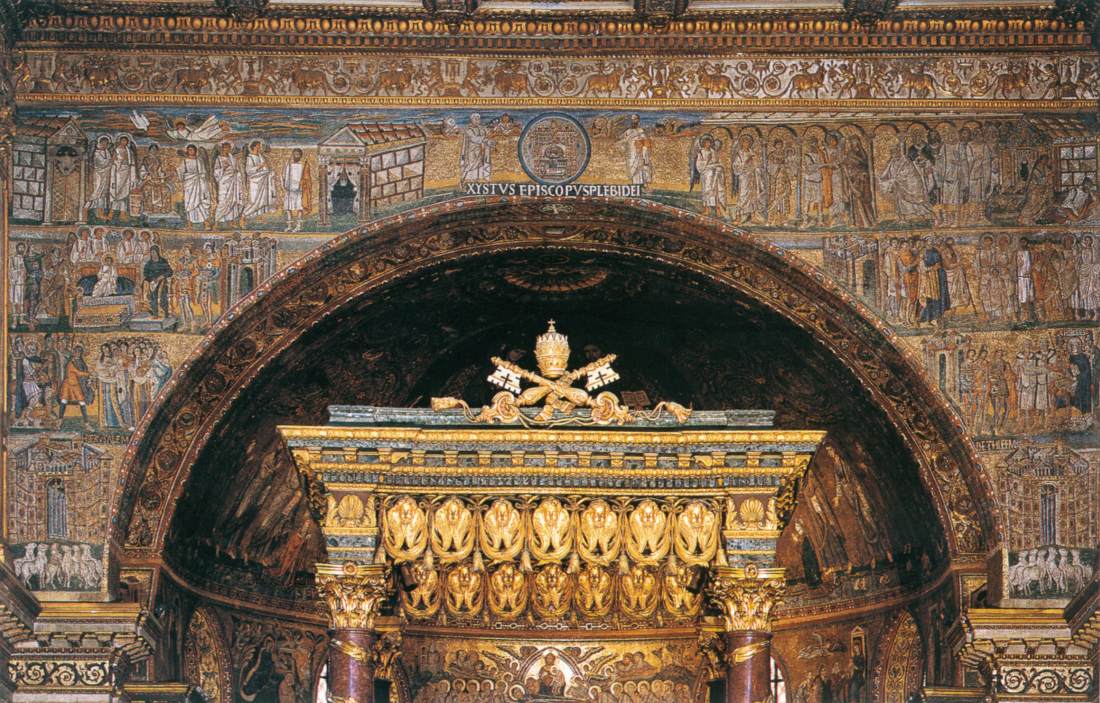
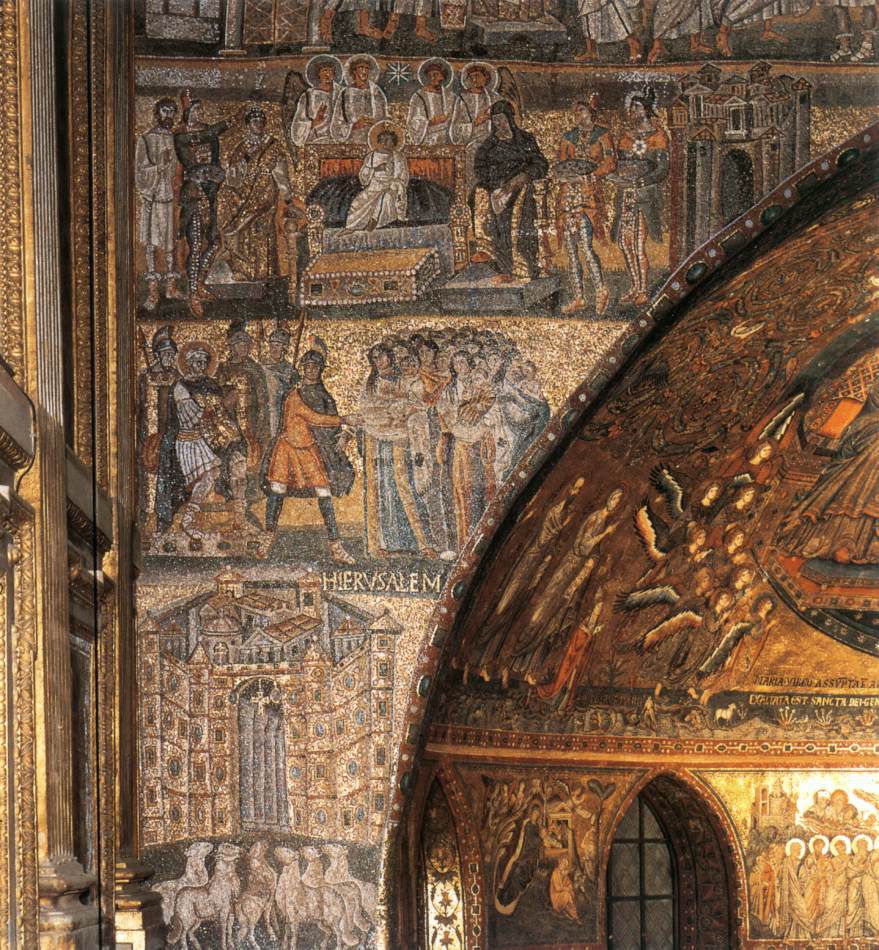
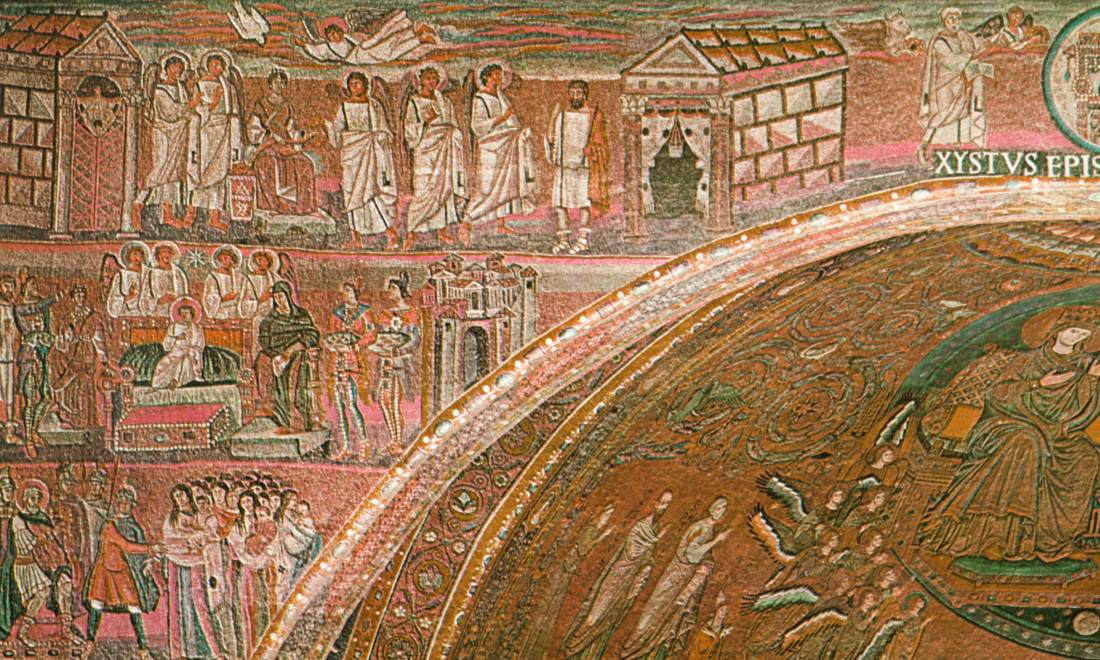
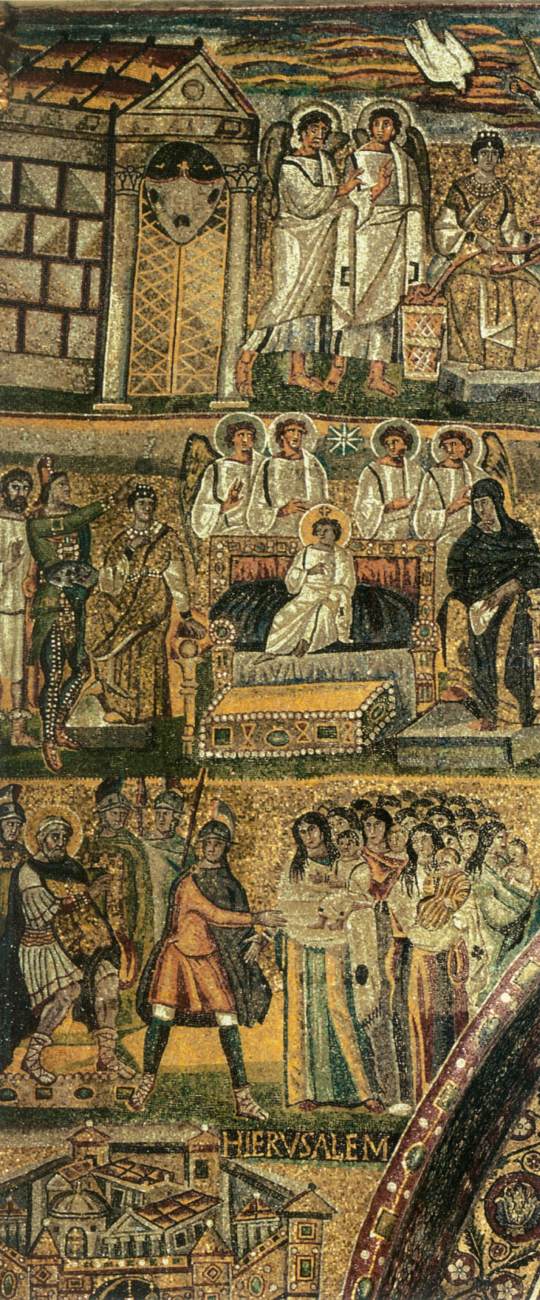
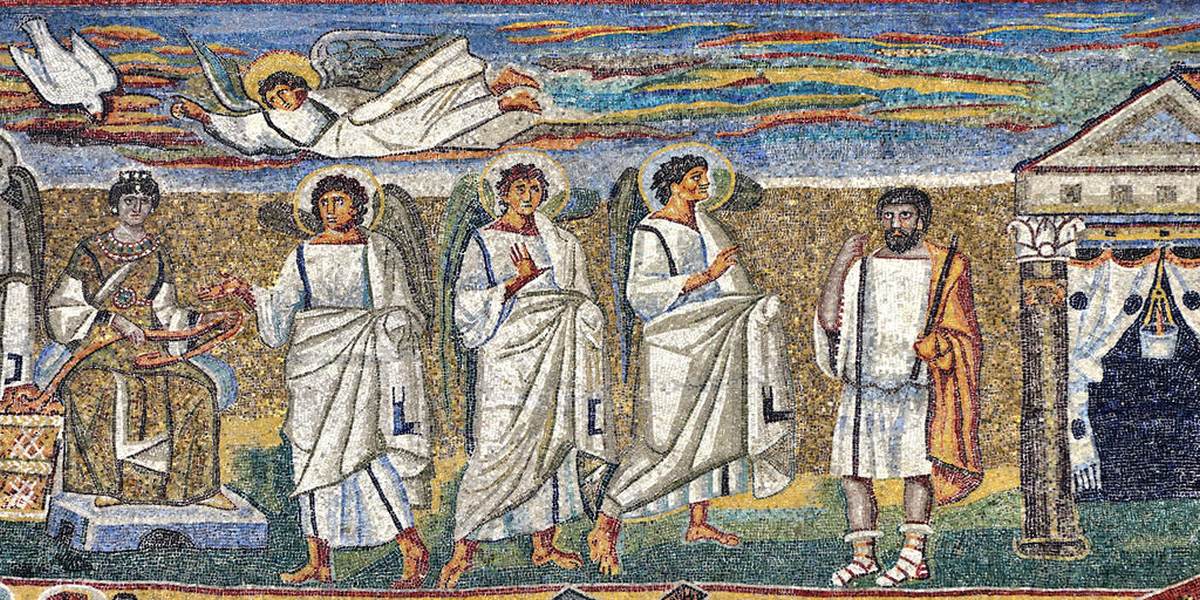
The decoration of the Early Christian churches, and particularly of the basilicas, was mostly with mosaics. The largest series of early mosaic decorations in Rome are the panels on the triumphal arch and the nave walls of Santa Maria Maggiore of c. 432-40.
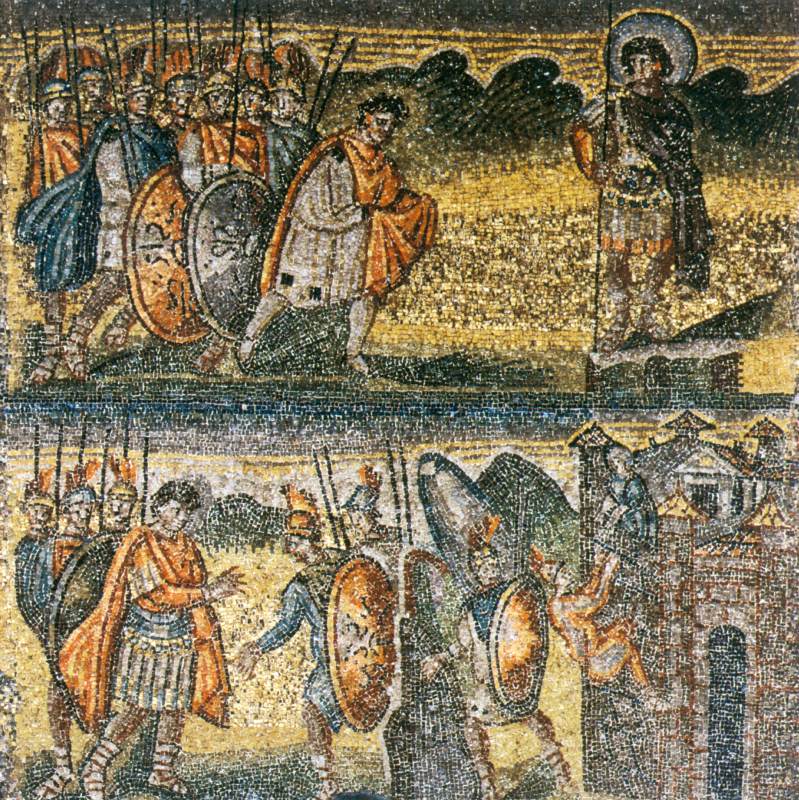
The nave mosaics depict Old Testament stories of heroes and patriarchs beginning with Abraham, taken mainly from the Books of Exodus and Joshua. Only 27 of the original 42 mosaic scenes remain. These mosaics are notable because they are somewhat realistic representations, often of miraculous events, with landscapes, blue skies, architecture in a kind of perspective, and modelled figures.
The triumphal arch mosaics are less realistic than those on the nave wall with static figures and a predominance of gold. These continuous scenes focus on New Testament events and symbolism relating to the infancy of Jesus. Mary, as Mother of God, is depicted as queen of Heaven, usually enthroned and dressed regally. Jesus is often depicted as a youth or young adult, not as an infant or child. The bottom register on one side depicts Bethlehem, the city of David, the king from whose descendants Jesus was born, and on the other, Jerusalem, the place of Jesus' death and resurrection. Twelve sheep, six on each side look out the gates of each city.
Despite extensive restoration and some losses the mosaics are the most important Early Christian narrative series extant.
| Early Christian Mosaics |
| Early Christian Mosaics (all) |
| Mosaics in Rome |
| Santa Costanza | Santa Pudenziana | Santa Maria Maggiore |
| Santi Cosma e Damiano | Other churches |
| Mosaics in Ravenna |
| Galla Placidia | Orthodox and Arian Baptisteries | San Vitale |
| Sant'Apollinare in Classe | Sant'Apollinare Nuovo |
| Mosaics in other places |